
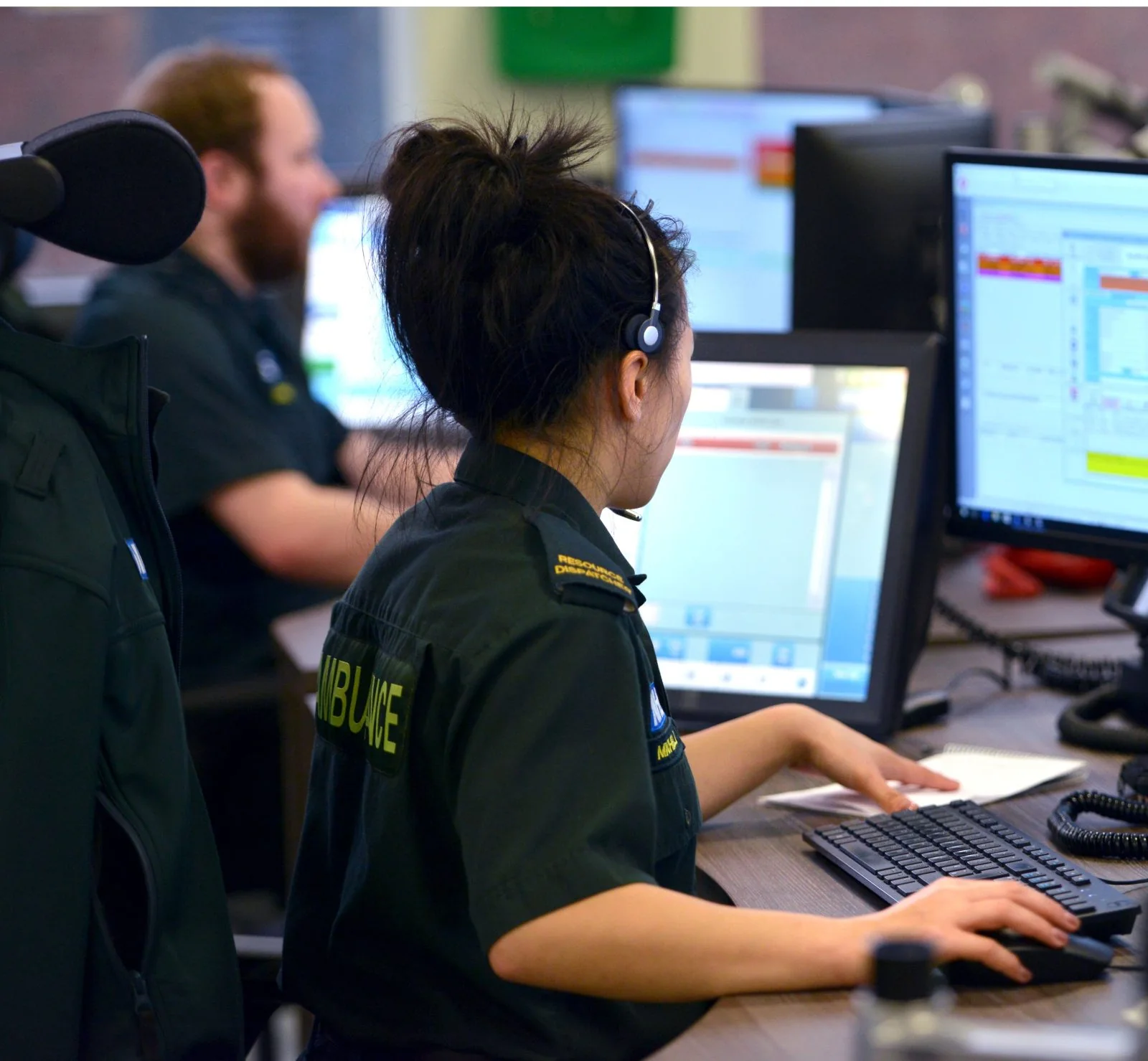
A collision reporting app crews complete at the roadside, offline, with the insurer notified the moment it is submitted
An ambulance crew in a road traffic collision has to stop and take details when they need to be somewhere else, and the report used to wait for a paper form after the shift. South East Coast Ambulance Service came to us for a simpler way. We built a collision reporting app for the roadside: it pre-fills the record, looks up the vehicles, works without a signal and notifies the fleet team and the insurer the moment it is submitted. In use since 2021, and now being rebuilt on the web with the six steps crews know unchanged.
- Client
- South East Coast Ambulance Service
- Working together
- Since 2021
- Pillars
- Systems
- Built as
- A tablet app and a desktop app, now web apps
From a paper form after the shift to a report sent from the roadside, and the app the Trust can keep growing.
South East Coast Ambulance Service runs a fleet of more than 600 vehicles across 3,600 square miles of the south east, with some calls needing a response in seven minutes. Driving at speed to the most urgent calls carries a risk of collision, and every collision, from a broken wing mirror to a full impact, has to be recorded and reported. Crews were doing that on paper, often a shift later, and the fleet insurance team spent its time chasing details before anything could reach the insurer. We ran discovery workshops with front-line crews and the operational team and designed the report around two aims: less time at the scene, and more and better information. The app that came out of them launches at the scene with the crew member, the time, the location and the vehicle already filled in, takes six short steps that only ask what applies, looks the other vehicle up from its registration, takes the photographs, works offline, and on submit sends a PDF and the notifications to the crew member, their unit and the fleet insurance team with the insurer copied.
It worked, and it has been in daily use since 2021. Crews have filed thousands of collision reports and close to ten thousand photographs from the roadside, and the fleet and driving standards teams run every case from the app behind it. In the Trust's own words, the insurer can receive and process a claim within the first hour of a collision, staff stay on the road, the lengthy paper forms are no longer required, and other ambulance services have looked at adopting it. With those results in, SECAmb asked us to take the app further, and we are now working together on its next phases.
 South East Coast Ambulance Service · Healthcare
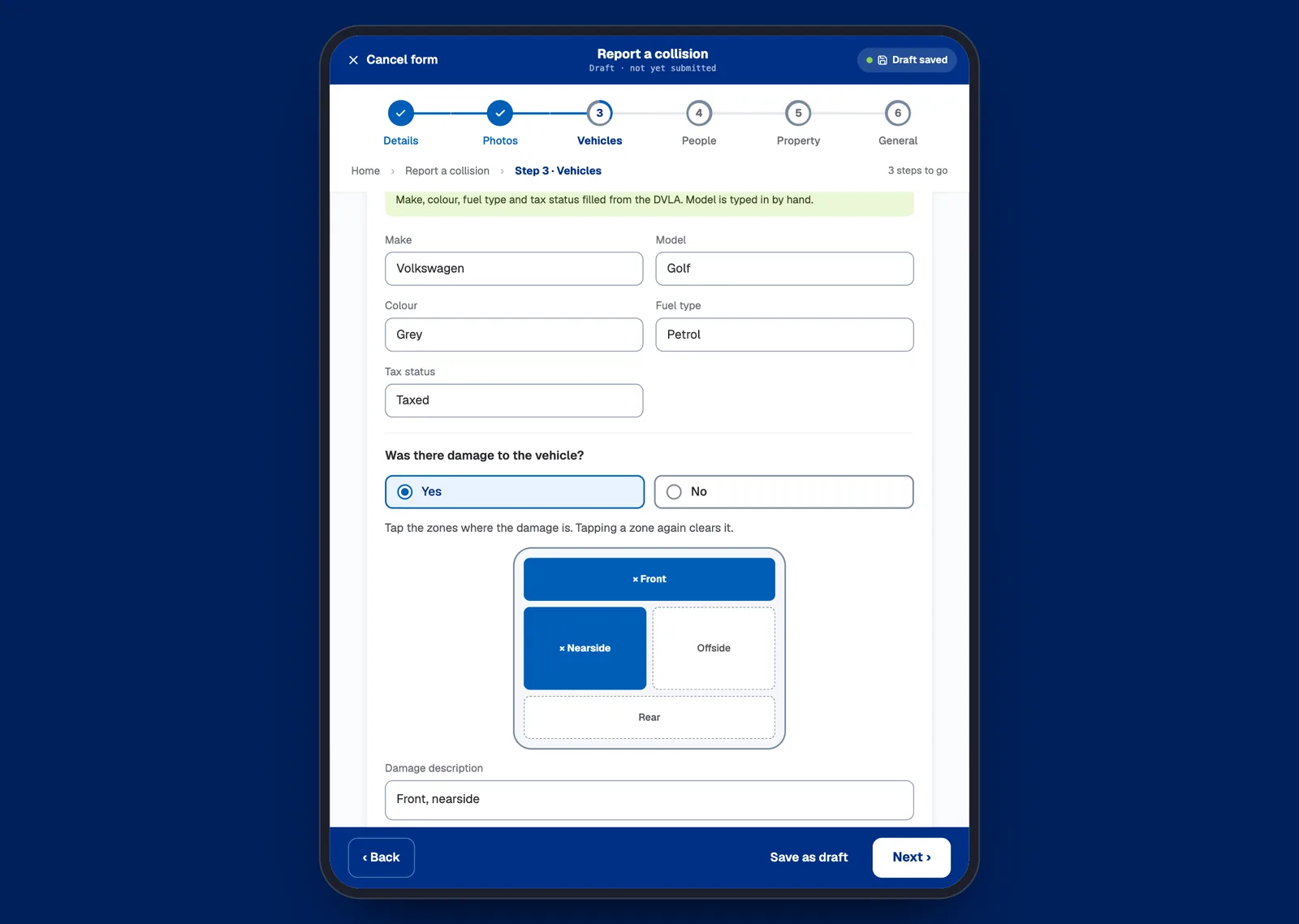
An offline collision reporting app for iPad, iPhone and Android, done at the roadside
Six steps that only ask what applies, the other vehicle looked up from its registration, photos and damage marked on an outline, for South East Coast Ambulance Service's crews on a tablet, with or without a signal.
Web appNext.js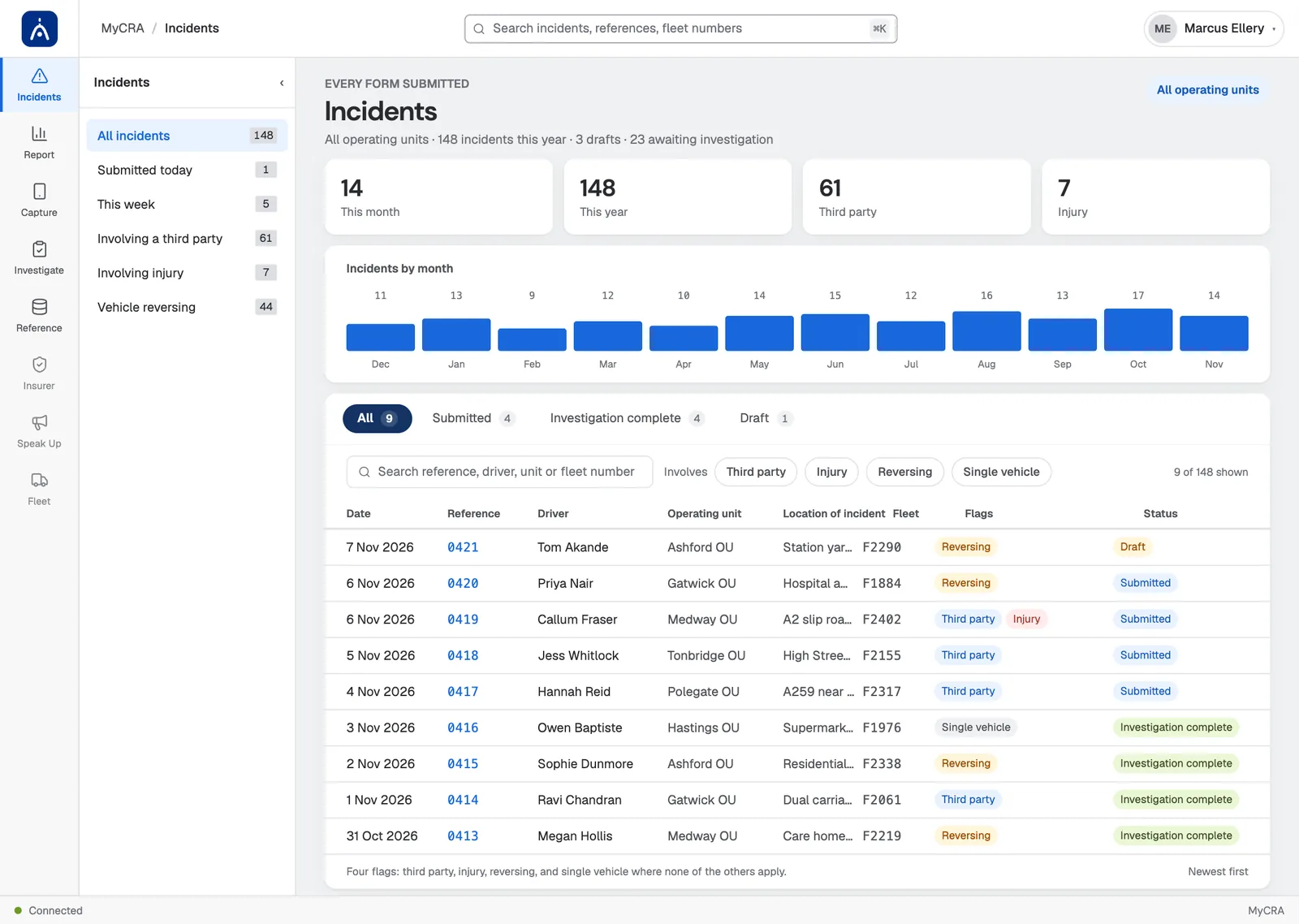 South East Coast Ambulance Service · Healthcare
Web-based case management that notifies the insurer the moment a crew submits
A PDF and three notifications sent on submit with no approval gate, then an incident list, case view, investigation and comment thread for South East Coast Ambulance Service's fleet and driving standards teams.
Web appNext.js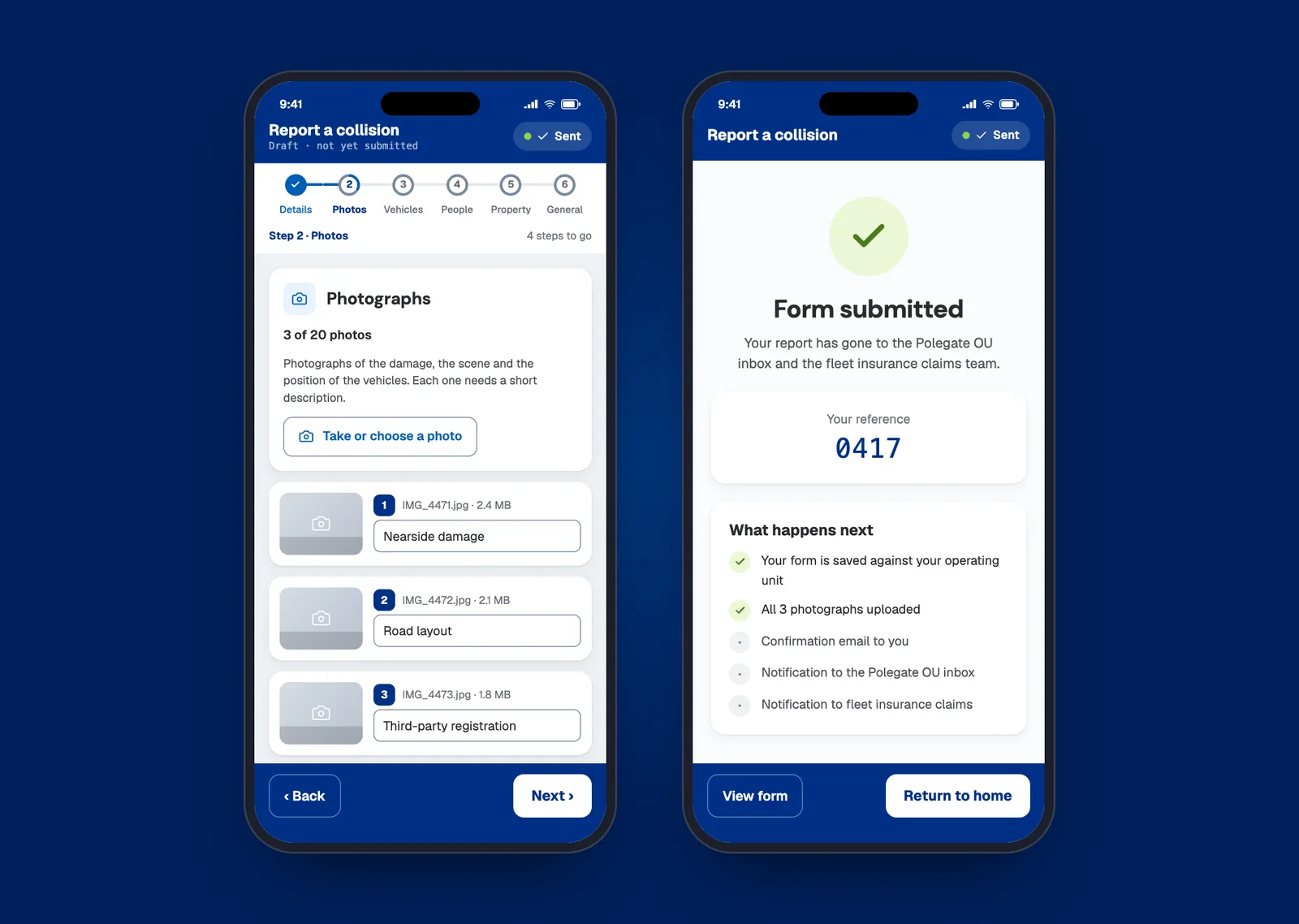 South East Coast Ambulance Service · Healthcare
A full web-based operational system rebuilt from FileMaker, every record moved
Both of South East Coast Ambulance Service's collision apps rebuilt on Next.js and Supabase, with their history moving across, row-level security for the four privilege sets and questions added without a release.
MigrationFileMakerNext.js- South East Coast Ambulance Service · Reporting
Repeat drivers and collisions by type, over a rolling year
Two reports the driving standards team reads from the case-management app: which drivers have had more than one collision in the last twelve months, and collisions by type, with the flags for reversing, a third party and an injury.
ReportingCase management
Case studies
See the work in full
Our case studies go screen by screen through the systems we have built for clients. We share them privately, so our clients' details stay between us and the people thinking of working with us.
The partnership in numbers
4,642
Collision reports recorded at the roadside since 2021
9,823
Photographs taken at the scene and filed with their report
2,000
Crew members, across one of the UK's largest ambulance trusts
1 hour
Within which the insurer can receive and start the claim, in the Trust's words
How we work together now
One record from the roadside to the insurer: the crews' app and the case-management app, rebuilt on the web with what the Trust asked for next built in.
- 01SystemsThe foundation
The roadside app and the case-management app, on one database
For crews: six steps that pre-fill what the system knows, look the other vehicle up from its registration, mark the damage on an outline, take the photographs and work without a signal, installed from the browser on an iPad, a phone or a desk. For fleet insurance and driving standards: the notifications sent on submit, an incident list with its flags, each case with its investigation and comment thread, and the reports. Built on Next.js, React and Supabase, with the questions held in a registry the Trust maintains itself.
The pains we set out to solve
An ambulance crew involved in a collision is in the same position as anyone else, obliged to stop, take down details and report it, with one difference: they are usually on their way to someone who needs them. Finding the owner, taking names, photographs and injuries takes time at the scene, and under that pressure details were missed. When the shift ended there was often no time to write the report up until the next one, on a long paper form, so records arrived late, were inaccurate, were claimed late or were not claimed at all.
For the Trust that cost response time at the roadside and money afterwards: a slow or incomplete submission means a slower claim, longer in hire vehicles and a weaker position to defend its staff, and the Trust is judged on how fast it notifies its insurer. The fleet insurance team's days went on checking and chasing paperwork rather than managing claims, and by 2026 the monthly analysis the head of driving standards wanted was being built by hand in Excel, half a day or more each month.
What we set out to do together
A simple way to record a road traffic collision that gave response time back rather than taking it: a report a crew could complete at the scene in minutes, with everything the system already knew filled in, the other vehicle looked up rather than typed, photographs in place of prose, and nothing asked that did not apply. Then make the submission the notification, so the fleet team and the insurer had the full report the moment it was sent and nobody had to chase it.
Five years on, keep all of that and give the Trust room to grow it: rebuild both apps on the web so the money that went to a licence goes into the product, carry every report and photograph across, keep the six steps exactly as crews know them, and build in the questions, the investigation structure and the reporting the fleet and driving standards teams asked for, without adding a single box a crew does not need.
How the work grew, one piece at a time.
From the discovery workshops and the roadside app, to five years of reports and what they changed, to both apps rebuilt on the web. Scroll to watch South East Coast Ambulance Service's estate come together.
South East Coast Ambulance Service's estate in three stages. Foundations: the discovery workshops, the roadside app with its vehicle lookups and offline capture, and the case-management app with the insurer notified on submit. In use: five years of reports, photographs and case notes, the investigations and the reports read from them. Grow: both apps rebuilt on the web with a question registry, the new roadside questions, the history moved across, and the reporting pack next. Beneath them, the reports on repeat drivers and collision types measure all of it and feed back.
Discovery workshops with the crews who would use it
The Trust wanted a simple way to improve how collisions were recorded that also protected response times. In workshops with front-line crews and the operational team we designed the report around two aims, less time at the scene and more and better information, and decided what the app could fill in before a crew was asked anything.
A roadside app that fills itself in, looks the vehicles up and works offline
Launched at the scene on an iPad with the crew member, the time, the location from GPS and the vehicle from its fleet number already in. Six steps, Details, Photos, Vehicles, People, Property and General, each asking only what applies. The other vehicle's details from the DVLA on its registration, photographs with captions, witnesses and property, held on the device and synced when back in range.
The submission is the notification
On submit, a PDF of the report and three notifications at once, to the crew member, their operating unit and the fleet insurance team with the insurer copied, with no approval gate. Behind it, the case-management app for the desk: the incident list with its flags, each case with its photographs and people, an investigation block, a comment thread that is never edited, and two reports.
Five years of reports, and what they changed
4,642 collision reports, 9,823 photographs and 4,893 case notes from about 2,000 crew members. In the Trust's words, the insurer can receive and process a claim within the first hour of a collision, staff stay on the road and the lengthy paper forms are no longer required, and the fleet team no longer chases late submissions. Other ambulance services have reviewed the app with a view to adopting it.
What the Trust wanted next, designed with the fleet team
A workshop in March set the list: structured investigation outcomes, damage marked on the vehicle rather than described, new questions on the circumstances of a collision, and the monthly analysis built by hand in Excel. Through the summer we designed each new question with the fleet team as a tick-list or a conditional reveal behind the fields crews already know, never a seventh step, and showed the Trust a prototype of both apps in a new design.
Both apps rebuilt on the web, with a question registry
With the FileMaker licence and hosting renewal due in December, we rebuilt the capture app and the case-management app as web apps on Next.js, React and Supabase. Every question sits in a versioned registry with its step and the answer that reveals it, so the Trust adds a question without a release. The four levels of access became row-level security. Submit writes the whole report in one transaction, and offline capture was proven with the network fully off.
The history moved across, and the cutover
A migration reads every report, photograph, note, third party, person, property record, employee, vehicle and location from the FileMaker files and resolves each into the new model, with tests. The cutover is ahead of the renewal, so crews open the new app with their history in it and nothing to relearn.
The reporting pack, and the modules the licence money can fund
The analysis the head of driving standards builds by hand each month, time of day, day of the week, collision type, operating unit, repeat drivers and a map of where collisions happen, read from the record instead. Then structured investigation outcomes, the correspondence on a case, and the modules the Trust has asked about.
An app the Trust can keep adding to.
For five years a change to the app meant a change to the FileMaker files and the licence that went with them. On the web, the spend goes into the product: a new question is a row in the registry, the history is in one database, and the reporting the Trust builds by hand can be read from the record. The cutover comes first; these are what follow.
- The reporting pack: time of day, day of week, collision type, unit, repeat drivers and a map, from the record
- Structured investigation outcomes and the correspondence on each case
- The modules the Trust has asked about: driving concerns, start-of-shift vehicle checks and a view for the insurer