A CRM built around how a charter broker sells
Fliteline started on Pipedrive, which we set up and wired to the website and the white-paper landing pages. In 2026 Fliteline's team and ours replaced it with a CRM of Fliteline's own, joined to the website, the customer portal and every enquiry form, with a review on each new lead that a person signs off.
- Client
- Fliteline
- Built
- Their own CRM
- Replaced
- Pipedrive
- Live since
- April 2026
Enquiries arrived from every direction, and the CRM saw only some of them.
The problem. Fliteline's enquiries come from the website, the customer portal, white papers, enquiry forms and email. An off-the-shelf CRM held some of them, each tool kept its own copy, and nobody could see in one place where work came from or what happened to it next.
The approach. First we set up Pipedrive and connected it to the website and the landing pages. Then Fliteline's team and ours built a CRM of Fliteline's own: one inbox for every enquiry, a pipeline that follows the booking in operations, and a review on each new lead, proposed by Claude and accepted or undone by a person.
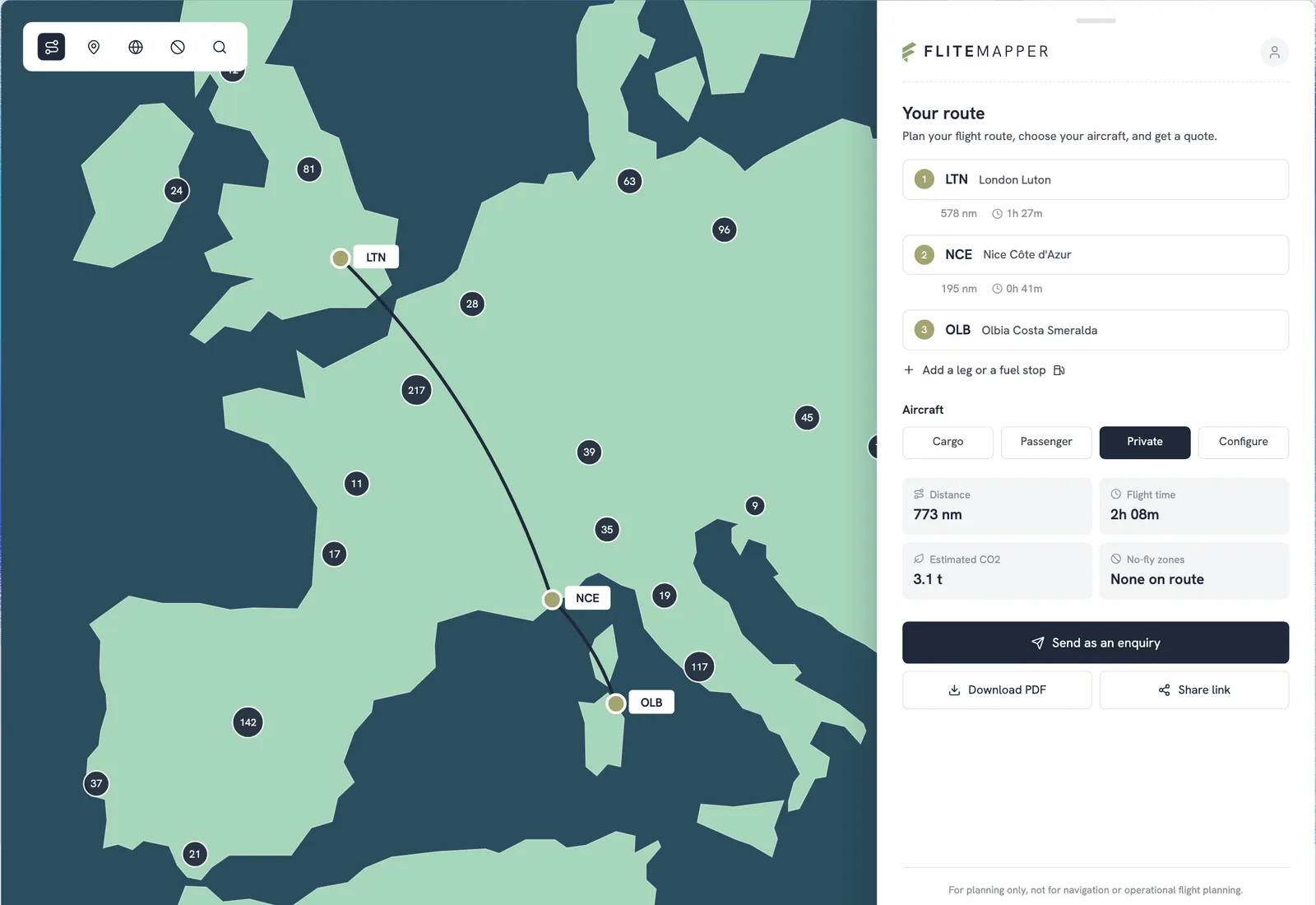
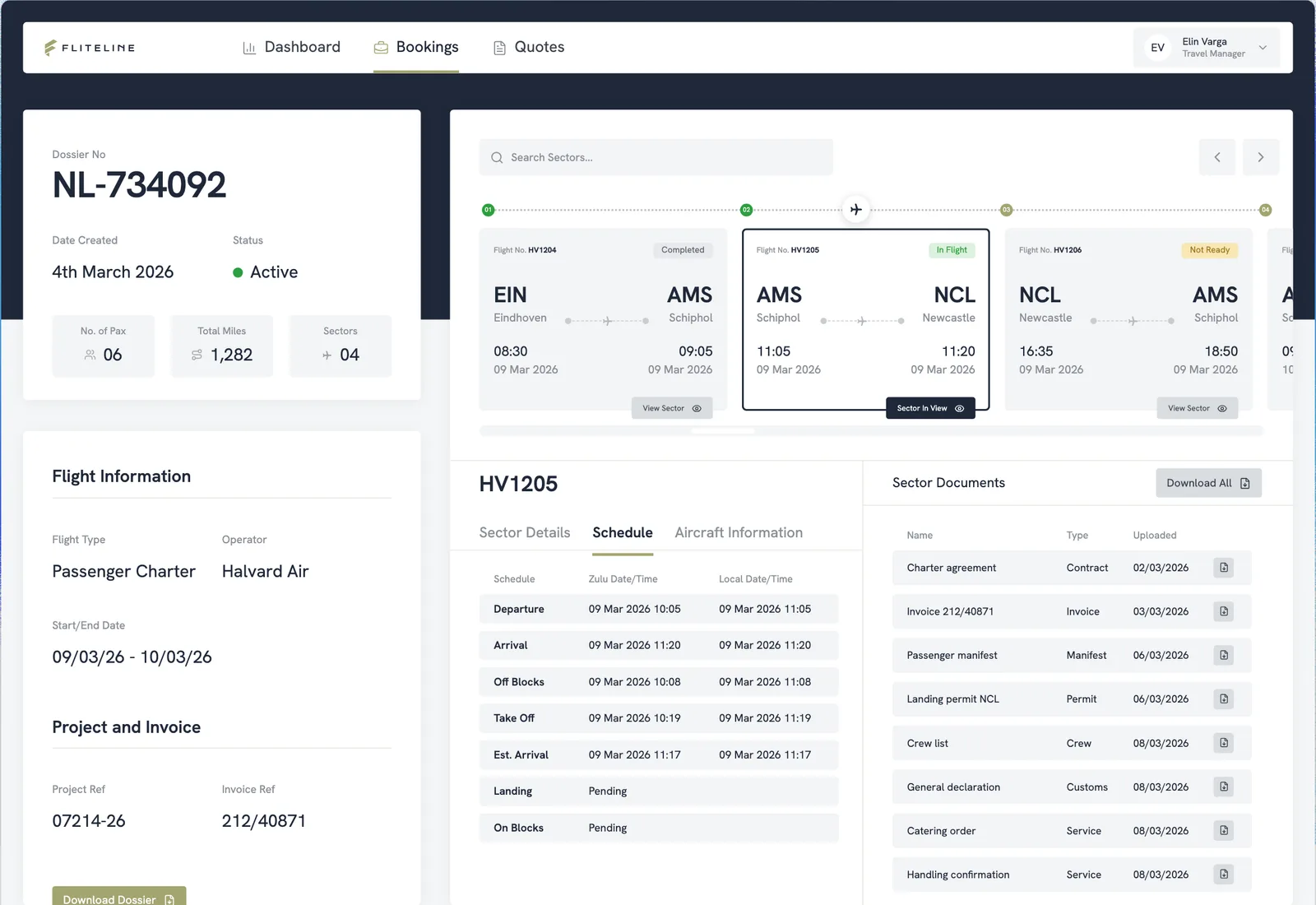
Fliteline's CRM, rebuilt with invented leads: the leads inbox filling with new enquiries from the website, the customer portal and an enquiry form, and the first lead open beside it.
One inbox
Every enquiry, from every door, in one list.
A review on every lead
A proposed fit and the flags that matter, for a person to accept.
A pipeline tied to the booking
Stages that follow the dossier in operations.
From a new enquiry to a deal, with a person deciding.
The CRM, module by module: the inbox filling, a review proposing a high fit for a time-critical cargo enquiry and being accepted, and the lead becoming a deal on the pipeline.
Every enquiry in one inbox
The website's forms, the customer portal and the team's email land in one list, each marked with where it came from.
A review on every new lead
Claude reads each new enquiry and proposes how well it fits and anything to watch, such as a time-critical movement. A person accepts it or undoes it; nothing changes without them.
From lead to deal
An accepted lead becomes a deal on the pipeline, and its stage follows the booking once operations has it.
What the CRM does
Built for a broker's day: the enquiry, the people behind it, the deal, and the booking it becomes.
- Pipedrive first: set up, and connected to the website and the white-paper landing pages
- Then a CRM of Fliteline's own, live since April 2026
- One leads inbox for the website, the customer portal, enquiry forms and email
- A review on every new lead: a proposed fit and flags, accepted or undone by a person
- Deals on a pipeline, with lost reasons and an activity timeline on every record
- Companies and contacts linked to each other and to their deals
- A link to operations, so a deal's stage follows its booking
- The source and campaign on every record, for reporting
Where it stands
The CRM has been Fliteline's since April 2026. The next steps make it sharper: enrichment through Clay, which is being brought in now, and dashboards for the pipeline inside the CRM.
Every enquiry now lands in one place with the channel it came from, whether that is the website, the portal, a form or the team's email.
What we used
- SupabaseIts database, sign-in and roles
- ClaudeReads each new lead and proposes a review
- FileMakerOperations, linked to each deal
- LeadfeederNames the companies visiting the website
- ClayEnrichment, being brought in now
- PipedriveWhere the CRM started